Tips and Tricks for Beginner Screen Reader Testers (VoiceOver)
2026-03-01
By Nate K. - Published Oct 27, 2025 - 3 min read
This article gives practical key commands and concepts you should know when learning to navigate with a screen reader — focusing on VoiceOver, Apple’s built-in screen reader for macOS and iOS.
Introduction
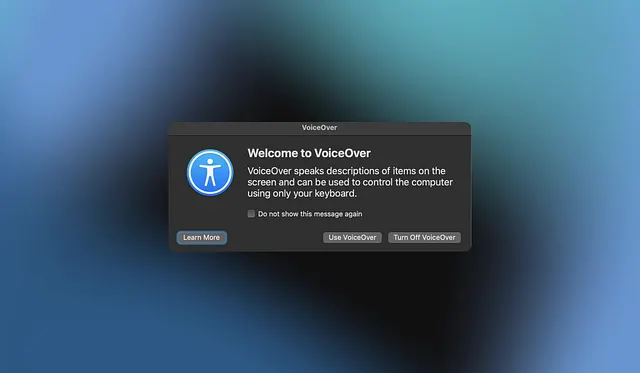
VoiceOver is a screen reader that lets visually impaired users navigate and interact with applications using keyboard and voice feedback. Developers and testers who learn to use screen readers gain valuable insight into how real users experience digital interfaces.
Pausing VoiceOver Speech
When VoiceOver begins reading content, you can stop or pause its speech — useful when testing or when it’s reading long, non-descriptive content like image file names.
Control + VoiceOver (Desktop)
Two-Finger Tap (Mobile)
Pauses or stops VoiceOver speech
Focusing VoiceOver on Your Browser
If VoiceOver starts outside the browser (e.g., in another app), you can shift focus back into it to continue testing:
Navigate to the Dock — Control + Option + D
Cycle apps — Command + Tab
These commands help ensure you’re testing the correct application window.
Using the Rotor Menu
The Rotor is a powerful VoiceOver feature that categorizes page elements (like headings, links, form controls, and landmarks) so you can quickly navigate to relevant content during testing.
Rotor Menu — Control + Option + U
Brings up Rotor to choose a category to navigate by.
Navigating Grouped Elements
Sometimes content is grouped (like a list or a widget), and VoiceOver might navigate inside that group by default. To step into or out of a group:
Step Into Group — Control + Option + Shift + Down Arrow
Step Out of Group — Control + Option + Shift + Up Arrow
Helps avoid getting stuck during navigation.
Adjusting VoiceOver Dialog Settings
VoiceOver lets you change how it sounds (voice, speed, pitch) as you test by using a voice control command:
VoiceOver Dialog Settings — Command + Option + Shift + Left/Right Arrow
Cycles through settings menus.
Conclusion
Learning basic VoiceOver commands and concepts makes screen reader testing much more actionable and informative for accessibility testers. Focusing on these workflows — like pausing speech, navigating with the Rotor, and managing groups — helps you better audit interfaces from the perspective of users who rely on assistive technologies.